


5 min readUpdated
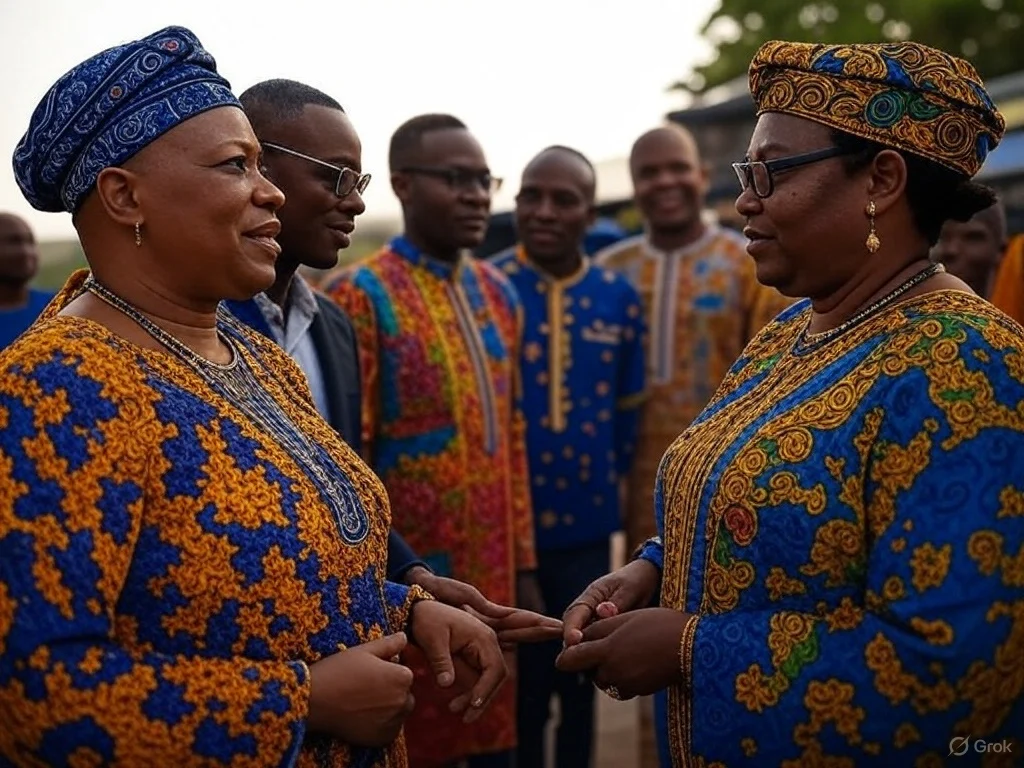
Walk into almost any Nigerian wedding, funeral or milestone birthday and you will see clusters of guests in the same fabric, each sewn into a different style. That is aso ebi, and for many families it is as much a part of the celebration as the food and the music.
If someone has just asked you to “take aso ebi” and you are not sure what you are agreeing to, this guide explains what the words mean, where the custom came from, how it works today and how to take part without stress or awkwardness.
What aso ebi means
Aso ebi comes from Yoruba. Aso means cloth and ebi means family, so the phrase translates as “family cloth”. You will also see it written as one word, asoebi.
As the name suggests, it was first tied to family: relatives dressing alike so that everyone could see who belonged together. Today the circle is much wider. Friends, colleagues, church members, old classmates and other well-wishers buy the same fabric, and the custom has spread well beyond Yoruba communities to celebrations across Nigeria and among Nigerians abroad.
Where the custom came from
There is no single agreed origin, and scholars tell the story in slightly different ways. Writers on aso ebi often credit the American anthropologist William Bascom, who studied Yoruba society, with linking it to age grades: groups of people of a similar age whose members wore matching cloth to mark the bond between them.
Another account, which draws on the Lagos historian Ayodeji Olukoju’s research into trade after the First World War, dates aso ebi as a fashion to about 1920. That was a boom period, when prices for exports such as palm produce were high.
By the 1950s, women’s associations, known as egbe, were turning out to ceremonies in matching cloth. Imported lace and george later joined locally woven and dyed fabrics, and today Ankara, lace, george and aso oke are all common choices.
Why people wear it
- To show support. Wearing the celebrant’s fabric says you are on their side, at their happiest or saddest moment.
- To be recognised. In a crowd of hundreds, family and close friends are easy to spot, which helps hosts, ushers and photographers.
- To belong. Being in the aso ebi group can feel like being part of the inner circle, and some hosts set aside souvenirs or seats for guests in the fabric.
- For the look. Rows of people in one colour, each in a different style, make for striking photographs.
There is a status side too. The quality of the fabric can signal how well a family is doing, and groups sometimes compete over whose aso ebi looks richest.
How it works today
The celebrant or their family chooses a fabric and colour scheme, then makes it available to guests, usually through a relative or friend who handles orders and payments, often in a WhatsApp group. Guests pay, collect their fabric and take it to a tailor, sometimes with a matching gele bought alongside it.
At big weddings, the bride’s family, the groom’s family and the couple’s friends often each have their own fabric. Our guide to Nigerian wedding traditions explains what happens on the day.
The fun part is that everyone chooses their own style. One woman turns her lace into a fitted gown, another into an iro and buba (wrapper and blouse) with a gele, or head tie, while the men go for agbada or a simple buba and sokoto (top and trousers) with a matching cap. On the day, expect group photographs with the celebrant, and expect them on social media soon after.
Prices vary widely, from modest Ankara to costly imported lace, and the tailor’s fee, gele and accessories come on top. Tailors also get very busy in peak party season, especially around December, so give yours plenty of time.
Aso ebi etiquette for guests
- It is optional. Aso ebi is an invitation to join in, not an entry fee. If the price does not fit your budget, decline politely and come in something respectful in a colour that complements the scheme.
- Pay on time. Coordinators often buy fabric in bulk and have their own deadlines. If you commit, pay by the date you are given.
- Check before you transfer. Confirm the account details with the celebrant or someone you know in the family before you send money. Our guide to spotting fake alerts and payment scams covers the warning signs.
- Do not change the fabric or colours. Choose any style you like, but do not swap in a different material, dye it, or add colours that break the scheme.
- Dress for the occasion. A style that works at an owambe, a lively Yoruba-style party, may not suit a church service, a nikah or a funeral.
- Speak up early if plans change. If you cannot attend, tell the coordinator as soon as you know, and do not expect a refund once the fabric has been bought.
Hosts have a part to play too. Keep prices fair, give guests enough notice, and do not make anyone feel unwelcome for coming without the fabric.
Before you say yes to the next aso ebi
Ask three questions first: how much it costs, when payment is due and when the event is. Then add up the full cost, including tailoring, gele and anything else you plan to buy. If you have several weddings and parties in one season, plan for aso ebi the way you would plan for rent or transport. Our guide to budgeting on a Nigerian salary can help.
Once you have said yes, book your tailor early, get your measurements taken and enjoy it. Done well, aso ebi is one of the warmest ways Nigerians have of saying “we are with you”.
Get new stories by email
Practical guides on money, work, tech and culture. No spam, and you can leave at any time.

