
5 min readUpdated
Lagos, or Eko as its own people call it, is Nigeria’s busiest city and one of the largest in Africa. Almost every Nigerian has an opinion about it, from people born there to visitors who spend half their trip in go-slow, but the facts about Lagos tell a fuller story.
If you want to know the place better than the traffic jokes allow, here are facts about its history, size, people and economy, with the numbers checked so you can repeat them with confidence.
It was Nigeria’s capital for most of the last century
Lagos became the capital of Nigeria in 1914, when the British joined the northern and southern protectorates into one colony. It stayed the capital through independence in 1960 and for three decades after.
When Lagos State was created on 27 May 1967, the city served as capital of both the state and the country. In 1976 the state capital moved to Ikeja, and the federal government decided to build a new national capital at Abuja. The move became official on 12 December 1991.
Losing the title did little to slow Lagos down. It is still the country’s commercial centre, and many of Nigeria’s biggest banks and companies keep their head offices there.
The smallest state, and much of it is water
Lagos State covers about 3,577 square kilometres, the smallest of Nigeria’s 36 states by area. Nearly a quarter of that is lagoons, creeks and rivers.
The state has 20 local government areas, grouped into five divisions known by the acronym IBILE: Ikeja, Badagry, Ikorodu, Lagos Island and Epe. Even the name has two histories. Eko is the Yoruba name, while “Lagos” is Portuguese for lakes, most likely borrowed from the town of Lagos in Portugal.
Facts about Lagos: nobody agrees on how many people live there
The 2006 national census put the population of Lagos State at about 9.1 million, slightly behind Kano. The state government rejected that result and ran its own parallel count, which it said came to about 17.5 million. In 2013 the National Census Tribunal cancelled the 2006 results for 14 of the state’s local government areas and ordered a recount there.
Most figures you will see today are estimates. Depending on who is counting and where they draw the city’s edge, they run from about 13 million to well over 20 million people, with the state government’s own figures at the high end. Either way, Lagos is Nigeria’s largest city and one of the biggest on the continent.
A long bridge and a town on the water
The Third Mainland Bridge runs about 11.8 kilometres across the Lagos Lagoon, linking Lagos Island to the mainland. When it fully opened in 1990, it was the longest bridge in Africa. Cairo’s 6th October Bridge took that title in 1996, but Third Mainland is still among the longest on the continent.
From the bridge you can see Makoko, a community that has lived on the lagoon since at least the 1800s. It began as a fishing village, and many residents are Egun people with roots in Badagry and the Republic of Benin. Much of it stands on stilts over the water, and canoes do the work of roads, carrying children, traders and fishermen.
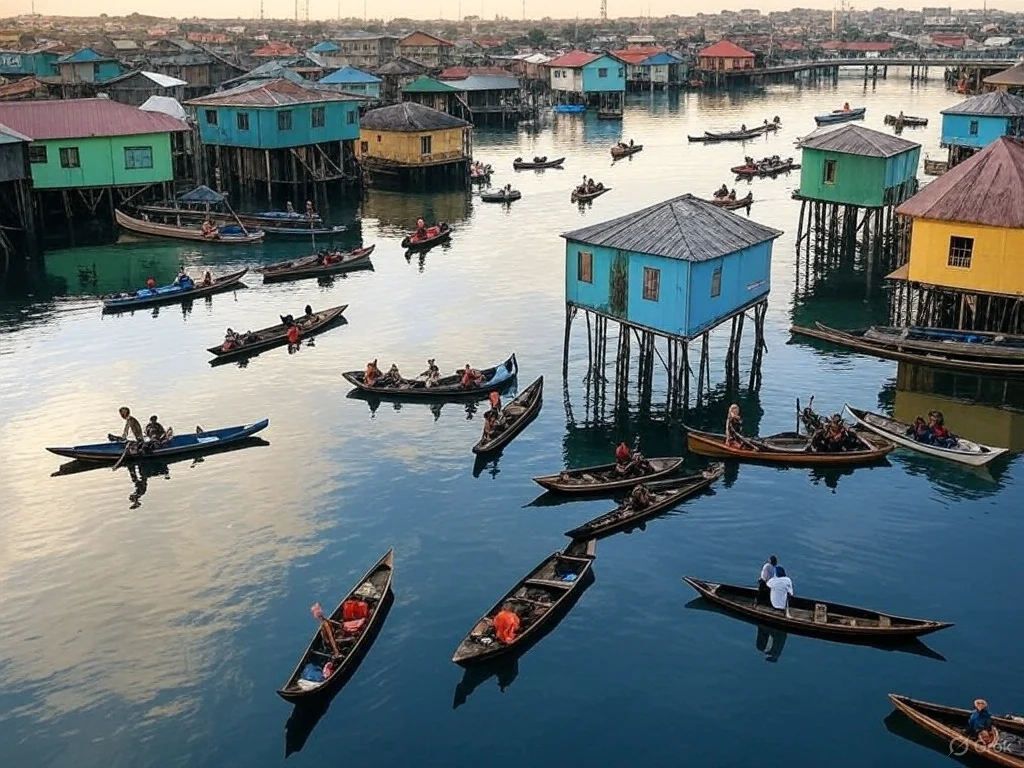
Makoko was not formally counted in the last census, and estimates of its population range from about 40,000 to 300,000. The state government has demolished parts of it more than once, including in 2012 and again from late 2025, citing safety and planning concerns. Residents and rights groups have challenged the evictions, so the waterfront today may not match older photographs.
The home of Nollywood
Nigeria’s film industry, Nollywood, is centred on Lagos, and the city’s streets, markets and estates turn up again and again on screen.
A 2009 survey by the UNESCO Institute for Statistics ranked Nigeria second in the world for the number of feature films produced, behind India and ahead of the United States. It counted films, not box office earnings, but it changed how the rest of the world talked about Nollywood.
Ports and markets that keep Nigeria supplied
Lagos is Nigeria’s main gateway for imports. Apapa is the oldest of its seaports, Tin Can Island followed in the late 1970s, and the Lekki Deep Sea Port, the country’s first deep seaport, opened in January 2023. Official trade figures show ports and terminals in Lagos handling most of Nigeria’s imports by value.
Many of those goods end up in the city’s famous markets. Balogun Market on Lagos Island sprawls across so many streets that it has no single address, and it is a favourite for fabric, including the lace and Ankara people buy for aso ebi. Computer Village in Ikeja is where much of the city goes for phones, laptops and repairs, and Alaba International Market in Ojo deals in electronics.
Bargaining is expected in all of them, usually in a lively mix of English, Yoruba and Nigerian Pidgin.
Eko o ni baje, and how to see it for yourself
The state’s motto, Eko o ni baje, translates literally as “Lagos will not spoil”. People use it more like “Lagos will prevail”, as a cheer, a promise and sometimes a joke when the traffic is at its worst.
If you want to see more of Lagos than the traffic, start here:
- Time the bridge. Cross Third Mainland outside the morning and evening rush and you get the lagoon view without the wait.
- Go to the big markets early. Keep your phone and wallet secure, and take someone who knows the lanes.
- Visit Makoko with respect. It is a home, not a tourist attraction. Go with a guide from the community and ask before you photograph anyone.
The more you know about Lagos, the more sense the noise begins to make.
Get new stories by email
Practical guides on money, work, tech and culture. No spam, and you can leave at any time.

